Emergency Generator Fuel Systems
Complete fuel systems for emergency power generators.
An emergency generator is only as dependable as the fuel system behind it. Premier Mechanical installs, replaces, relocates and upgrades the tanks, pumps, piping and controls that keep standby generators supplied during an outage — and documents the work so owners, distributors and inspectors can see what was done.
Who This Service Is For
- Building owners and property managers responsible for life-safety power
- Condominium corporations and multi-residential landlords
- Hospitals, long-term care homes and other healthcare facilities
- Consulting engineers and general contractors who need a fuel-system trade partner
Situations We Resolve
- An inspection or distributor report has identified deficiencies in the generator fuel system
- A day tank, main tank or transfer pump is reaching the end of its service life
- A new or replacement generator needs a fuel system designed around it
- Fuel transfer is unreliable — pumps cycle poorly, alarms fail or levels are not monitored
- Tanks or piping lack the containment, venting or protection expected of a current installation
What the Work Includes
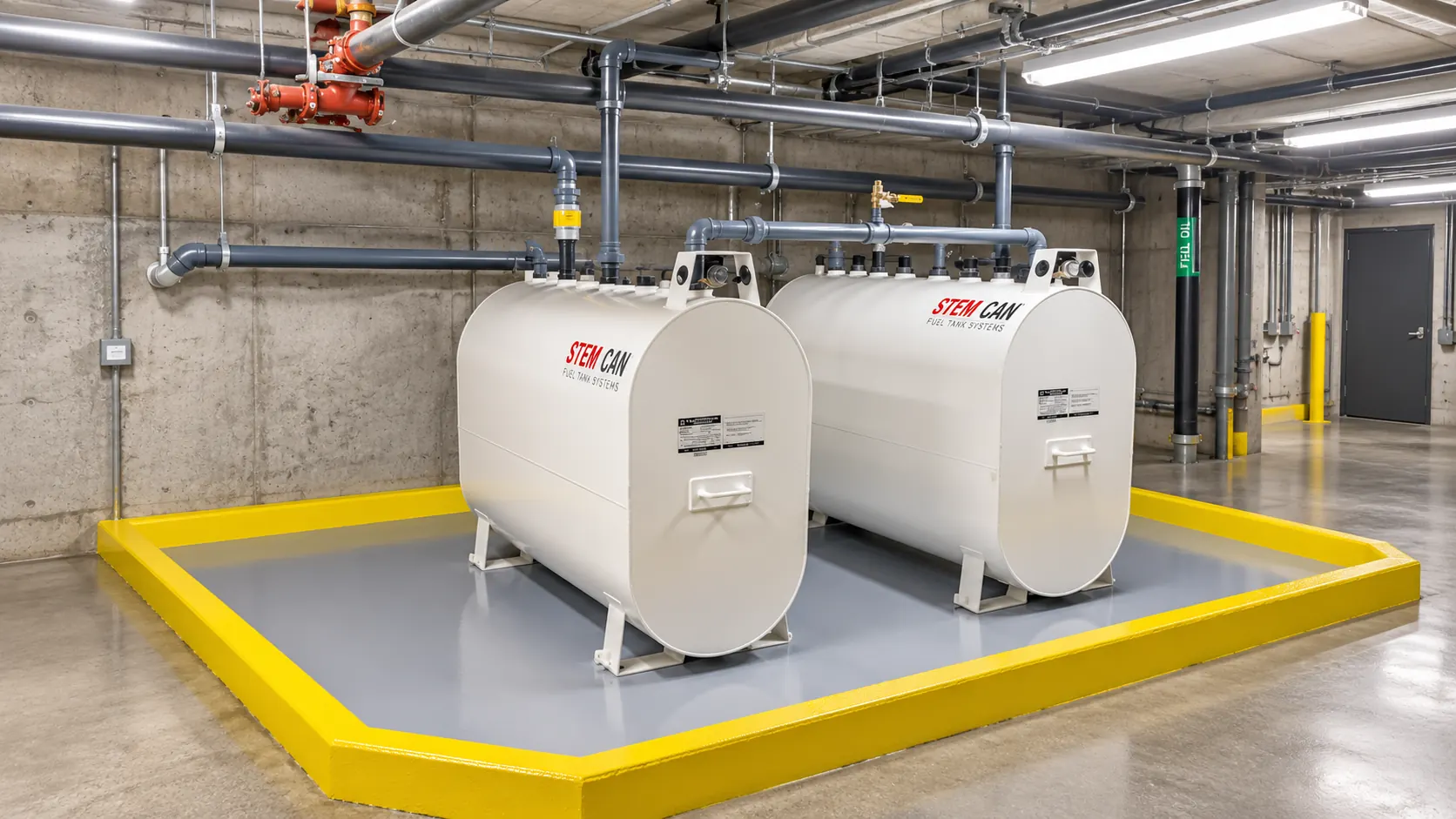
Day tanks and main storage tanks
Supply and installation of new tanks, replacement of aging tanks, and relocation where room layouts or access change.
Fuel transfer systems
Transfer pumps, duplex pump sets, controls, level monitoring and alarms that move fuel reliably from storage to the day tank.
Piping, valves and containment
Supply and return piping, valves, secondary containment and supports installed to suit the room and the equipment served.
Testing and documentation
System testing at turnover, with documentation suitable for owners, fuel distributors and future inspections.
How a Project Proceeds
Review
We review drawings, reports and photos, then visit the site to confirm the existing equipment, routing and access.
Scope and proposal
We define the work, identify where engineering input is required, and confirm shutdown and fuel-supply arrangements.
Fabrication and staging
Supports and assemblies are prepared in advance where possible, so time spent working on the live system is reduced.
Installation
Work is scheduled around the building's operations, with temporary measures planned if the generator must be out of service.
Testing and turnover
The system is tested, deficiencies are closed, and documentation is handed over for the owner's records.
Working in Occupied Facilities
Most generator fuel systems we work on serve buildings that remain occupied. Before work starts we agree on shutdown windows with the facility team, confirm how standby power will be covered while the system is out of service, and plan deliveries, lifts and noisy work around the building's schedule.
Related Projects
Related Guides
- Common Deficiencies in Older Emergency-Generator Fuel SystemsFrom lack of containment to improper venting, here is where legacy systems most often fail compliance.Read more
- Planning a Fuel-Tank Replacement in an Occupied BuildingManaging access, noise, fumes, and temporary power when replacing critical storage infrastructure.Read more
Discuss This Service
Ready to review a project or schedule an assessment for your facility?
Helpful to Include in Your Inquiry
- Site address and facility type
- Equipment served (generator, fire pump or both) and approximate tank sizes
- Any inspection, deficiency or distributor report you have received
- Photos of the tanks, piping, pumps and controls, if available
- Required completion date or any deadline from an order or inspection
- Known access restrictions, shutdown windows or occupancy constraints