Why older systems are cited
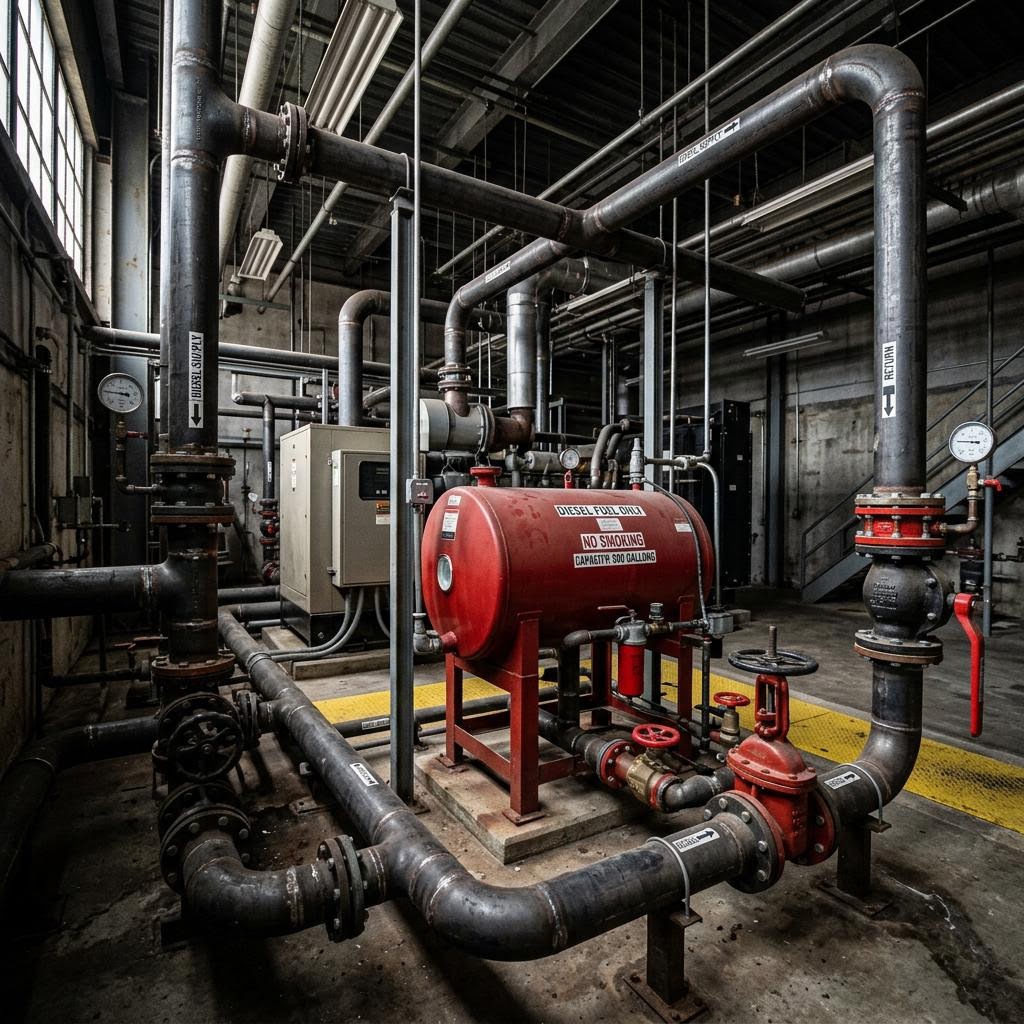
Many generator fuel systems in Ontario buildings were installed decades ago and have been maintained rather than upgraded. Requirements and expectations have changed since then, and components wear out. The result is that inspections of older systems commonly identify a similar set of deficiencies.
Missing or inadequate containment
Older tanks and piping were often installed without secondary containment, or with containment that is undersized or damaged. A leak from an uncontained tank or pipe can reach floor drains or the surrounding structure.
Correction usually means adding a contained tank, containment around the existing tank, or double-wall or contained piping.
Venting problems
Vents that are undersized, poorly routed or terminated in the wrong location can affect filling and allow fuel vapour to enter the building. Correction involves rerouting or replacing vent piping and terminations.
Missing valves and safety devices
Inspections frequently note missing fire-safety valves, anti-siphon protection or isolation valves. These devices limit how much fuel can be released if a pipe fails or a fire occurs. Correction means installing the required devices at the correct locations.
Obsolete pumps, controls and alarms
Original transfer pumps and controls may no longer be supported, and level alarms may be missing or not working. A failed transfer pump can leave a generator running only on what is in its day tank. Correction may involve a new pump set, controls and alarm wiring.
Corrosion and physical damage
Corroded tank supports, piping and fittings are common in older mechanical rooms. Damaged components are typically replaced rather than repaired.
Why corrections need a whole-system view
Correcting one deficiency often affects another part of the system — new containment may change piping routes, and a new tank may require different pumps or controls. Reviewing every cited item together avoids corrections that create new problems.
Related services: Emergency Generator Fuel Systems and CSA B139 & TSSA Compliance Upgrades.
Need Site-Specific Advice?
Every facility is different. If you have received a deficiency report, we can review it and provide a detailed plan for corrective action.
Upload Inspection ReportOfficial Sources
This article is general information, not advice for a specific installation. Requirements depend on the system and its circumstances; confirm them with TSSA, your fuel distributor or a qualified contractor. Work completed in accordance with applicable Ontario regulations, TSSA requirements and current project-specific codes and standards.